
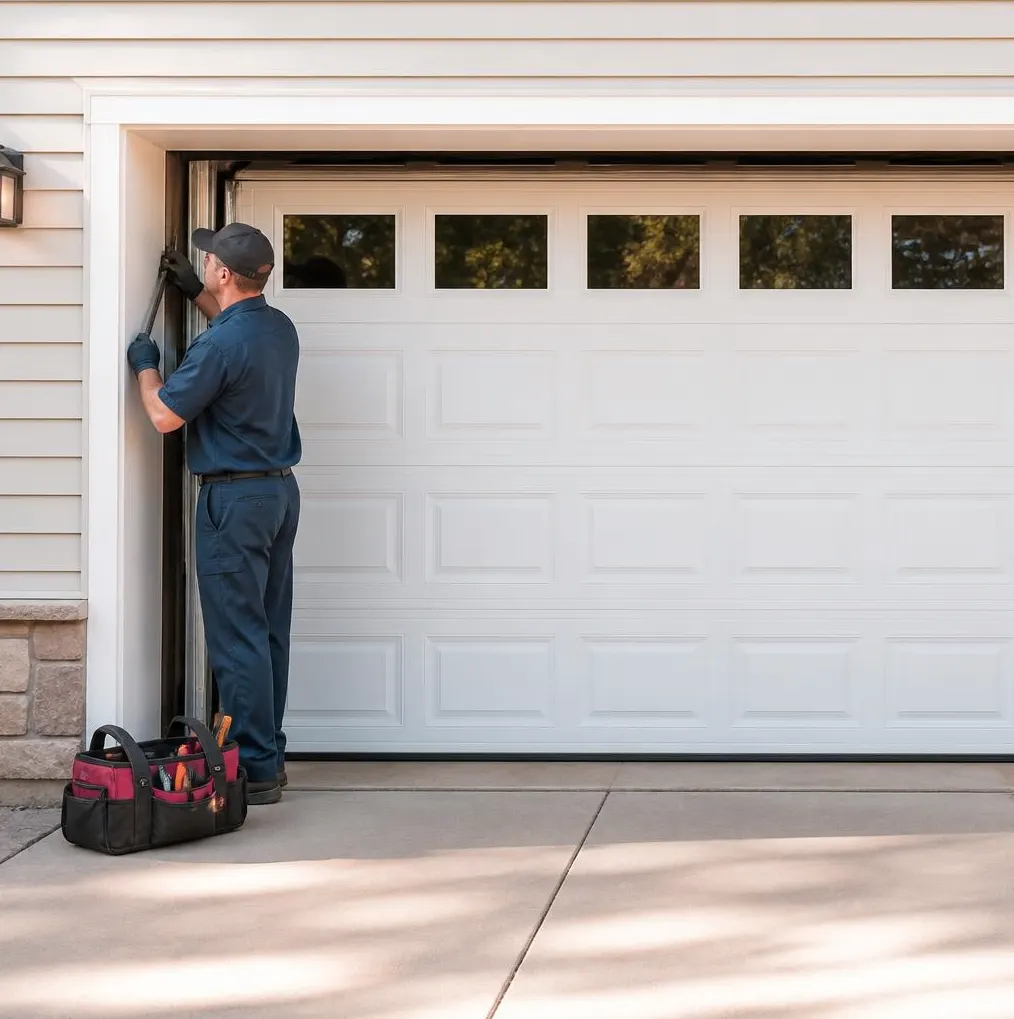
The Mistake: "If It Still Opens and Closes, It's Fine"
This is the argument that wins most nights, because it sounds reasonable. The door looks solid. It goes up, it comes down, nobody's gotten hurt yet. Replacing anything feels like spending money to fix a problem you can't see. And honestly, a lot of doors from the 1990s were built heavier than what you'd get off the shelf today, so the instinct that "they don't make them like this anymore" isn't wrong.
The problem is that "still works" and "safe" are two different questions. A garage door is one of the few parts of a house with enough stored mechanical energy to seriously hurt someone if a component fails. Age doesn't make that energy go away — it just makes the parts holding it back more tired. Here's how to sort out what actually needs attention from what's just old.
What to Retrofit Now, No Debate
Opener safety sensors
If your opener predates the early-to-mid 1990s, there's a real chance it was built before photo-eye sensors and auto-reverse became standard equipment. Those are the two little boxes near the floor on each side of the track, and the feature that makes the door bounce back up if it meets resistance instead of continuing to close. If your opener doesn't have working photo-eyes, or the door doesn't reverse when you hold a 2x4 flat on the ground under it, that's not a "nice to have" — it's the single most important upgrade on this list, especially with kids or pets around the garage.
Spring containment cables
Torsion springs store enormous tension, and when an old one finally breaks, it can send pieces across the garage. A containment cable (sometimes called a safety cable) runs through the spring and keeps it from flying if it snaps. Plenty of doors from this era were installed without one. It's a small part, inexpensive to add, and it turns a dangerous failure into a loud bang and nothing else.
Rusted or corroded hardware
Humidity and salt air do real damage over 25-plus years — brackets, bottom brackets, and cable ends are the places to check first. Surface rust on a track is cosmetic. Flaking, pitted rust on a bracket that's holding cable tension is a structural question, not a cosmetic one.
Wind-load bracing
Hurricane season in this part of Florida isn't optional to plan around, and a lot of older doors were installed before wind-load bracing was standard practice. A door that looks fine in calm weather can perform very differently under sustained wind pressure. Having a tech check the bracing and reinforcement — not just the door panels themselves — is worth doing before storm season rolls around again, not during it.
What's Fine to Leave Alone
Heavy steel or solid wood panels in good condition
If the panels aren't dented, delaminating, or swollen from moisture intrusion, there's no safety reason to replace them just because they're old. Many older doors are thicker-gauge steel than today's budget options, and a solid door with no rust-through or warping can keep going for years yet.
Original tracks, if they're straight and tight
Age alone isn't a reason to swap out track. If it's not bent, the mounting brackets are tight to the frame, and the door rides smoothly without binding or rattling, leave it. Replacing straight track is spending money to fix something that isn't broken.
Manual, non-electric operation
If part of the argument is "we should get a fancier opener," that's a convenience decision, not a safety one. A well-maintained older opener with working safety sensors is just as safe as a new smart one — it just doesn't talk to your phone.
A Simple Rule to Settle the Argument
Anything that stops a moving door or contains stored energy (sensors, auto-reverse, spring containment cables, rusted load-bearing brackets, wind bracing) gets fixed regardless of how old or new the door is. Anything that's purely cosmetic or convenience-based (panel style, keypad features, smart-phone control) is a "when you feel like it" decision, not a safety one. That split usually ends the debate, because it's not really about old versus new — it's about what fails dangerously versus what just looks dated.
When to Call Precision Garage Door of Telogia
If you're not sure whether your opener has working auto-reverse, or you've never seen a safety cable on your springs, that's exactly the kind of thing worth a second set of eyes before an argument turns into a guess. Our Garage Door Maintenance & Tune-Up service covers a full safety check — sensors, cables, rust, bracing — so you know which category your door actually falls into instead of debating it. And if your springs are rusted through the containment cable is missing entirely, our Garage Door Spring Repair techs can add one properly, with the tension released safely, rather than you guessing at it in the driveway.
If you're in Telogia, Bristol, Hosford, Blountstown, Sopchoppy, Crawfordville, Quincy, or Tallahassee and you want a straight answer on what your older door actually needs, give Precision Garage Door of Telogia a call. We'll tell you honestly what to fix and what to leave alone — no upsell, just the facts.