
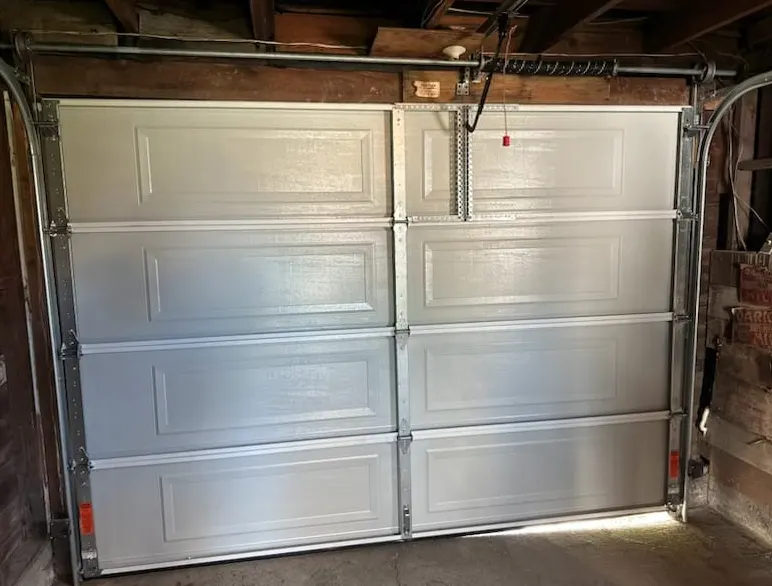
We get called out to plenty of homes where the garage door itself works fine, but the homeowners are mid-argument over whether to replace it with an insulated model. One spouse is holding a quote with two price points. The other is asking why they'd pay extra for insulation in Florida when nobody's worried about frost. Both of them are half right, and the answer depends on something neither of them has really talked about: what that garage actually does for the household.
What R-value is actually measuring
R-value measures resistance to heat transfer through the door panel itself. A higher number means less heat moves through the steel from outside to inside, or vice versa. An insulated garage door usually has a layer of polystyrene or polyurethane foam sandwiched between two steel skins, versus a single layer of steel on an uninsulated door. That foam also adds rigidity, which matters more here than most buyers expect.
Who actually benefits from the extra R-value
- Attached garages that share a wall with living space. If your garage sits right next to a bedroom, laundry room, or the kitchen, heat soaking through an uninsulated door in the afternoon pushes into that shared wall and makes your AC work harder. An insulated door cuts that transfer noticeably.
- Garages used as workshops, gyms, or hobby space. If you or someone in the house spends real time out there, especially during Florida's long hot stretch from late spring through early fall, the difference between an insulated and uninsulated door is the difference between tolerable and miserable by 2 p.m.
- Garages with a window unit or mini-split. If you're actively conditioning that space, an uninsulated door is working against the equipment every hour it runs.
- Doors that face direct afternoon sun. A west- or south-facing door takes a heat beating for hours. Insulation reduces how much of that gets inside.
Who is paying for nothing
- Detached garages used purely for storage. If nobody's spending time in there and it's not attached to the house, the R-value isn't doing much work for you.
- Garages that are just a drive-through for the car. If you pull in, grab your bags, and go inside within a minute, the temperature inside the garage barely matters to your comfort.
- Homes where the garage has open vents or gaps elsewhere. If the space isn't sealed up anywhere else, like a vented attic connection or an uninsulated side door, an insulated garage door is patching one leak in a boat full of them.
The part of this argument nobody brings up
Temperature control isn't the only thing you're buying with an insulated door, and this is where the decision gets more interesting for this area specifically.
- Rigidity and wind performance. The foam-and-steel sandwich construction is stiffer than a single steel skin, which helps the door perform better under wind pressure during storm season. That matters here regardless of how you feel about R-value.
- Dent resistance. Double-layer doors hold up better against stray basketballs, bikes, and the occasional bumper tap.
- Noise dampening. Insulated doors run quieter, which is a real benefit if the garage sits under a bedroom or if afternoon downpours already have everyone on edge.
- Moisture behavior. In a humid climate with swings between soaked afternoons and sticky nights, a steel insulated door with a thermal break resists the condensation and swelling issues that plague solid wood doors or bare single-layer steel.
How to settle it
Ask three questions before you decide: Does anyone spend meaningful time in that garage during the hot months? Is the garage attached to conditioned living space? Does the door take direct sun for several hours a day? Two or more yeses, and the insulated door earns its keep on comfort and energy use alone, on top of the storm and durability benefits. All noes, and you can likely save the money and put it toward a model picked for wind rating and build quality instead.
When to call Precision Garage Door of Telogia
If you're weighing a new door and want someone to actually look at your garage's situation, sun exposure, and what's on the other side of that wall, that's a conversation worth having before you buy. We handle Garage Door Installation & Replacement for homes across Telogia, Bristol, Hosford, Blountstown, and the rest of Liberty County, and we'll tell you honestly whether insulation is going to do anything for your specific setup. If your current door is already struggling with rust, swelling, or panels that don't sit right after a few humid seasons, our Garage Door Maintenance & Tune-Up service can extend its life while you decide what's next.
Give Precision Garage Door of Telogia a call to get a straight answer on insulated doors for your home in Telogia, FL, no pressure, no upsell.