
The Mistake Most People Make First
When a garage door stops responding, almost everyone's first move is to blame the opener. It's the part you interact with — you press the remote or the wall button, nothing happens, so the opener feels like the obvious culprit. The temptation is to start pulling the opener cover off, or worse, to grab the door and muscle it open by hand without checking anything else first. That second move can be dangerous: if the real problem is a broken spring, a door that looks stuck can suddenly drop or lurch once you release it, and a standard garage door panel weighs more than most people expect.
A technician doesn't start with the opener. They start with the cheapest, fastest things to rule out, then work toward the heavier mechanical parts. Here's that order, and what each step actually involves.
Symptoms Worth Noting Before You Call
What the door does (or doesn't do) when you try to open it tells a technician a lot before they even touch it:
- Dead silence — no hum, no light, nothing happens at all
- A hum or click, but no movement — the opener is getting power but something downstream isn't engaging
- The door moves a few inches, then reverses or stops — often a safety sensor or obstruction issue
- It opens manually but not with the remote or wall button — points to the opener or its controls, not the door itself
- A loud bang followed by the door not moving at all — classic sign of a broken spring
Hold onto whichever of these matches your situation. It's the first thing a technician will ask about.
The Causes, in the Order a Technician Checks Them
1. Power Supply
Before anything else: is the opener actually getting electricity? A tripped breaker, an unplugged cord (sometimes knocked loose during storage or cleaning), or a tripped GFCI outlet in the garage are common after a power blip. Afternoon storms during hurricane season cause plenty of brief outages and surges that trip breakers without anyone noticing until they try the garage door.
2. Safety Sensors
Most openers won't close — and some won't open — if the photo-eye sensors near the bottom of the tracks are misaligned, dirty, or blocked. Humidity and condensation can fog the lenses, and a bumped sensor bracket (from a bike, a cooler, stored yard tools) throws off the alignment just enough to stop the door from responding. The fix here is simple: wipe the lenses and realign the sensors so their small indicator lights are both solid, not blinking.
3. Remote and Wall Control
Dead remote batteries, a remote that's lost its programming, or a wall button with a loose wire are next on the list. Quick to check, quick to fix, and surprisingly common.
4. Manual Disconnect
Every opener has a release cord (usually red) that disconnects the door from the motor for manual operation. If it was pulled accidentally — by a curious kid, a stored item catching it, or during a recent power outage when someone opened the door by hand — the opener will run without moving the door at all.
5. Track and Roller Obstruction
Next, a technician checks the tracks themselves. Florida humidity causes wood-framed garage openings and door panels to swell slightly, which can bind rollers in the track. Debris, a bent track from an impact, or rollers that have jumped the rail after years of wear will all stop the door cold, sometimes with a grinding sound rather than silence.
6. Springs
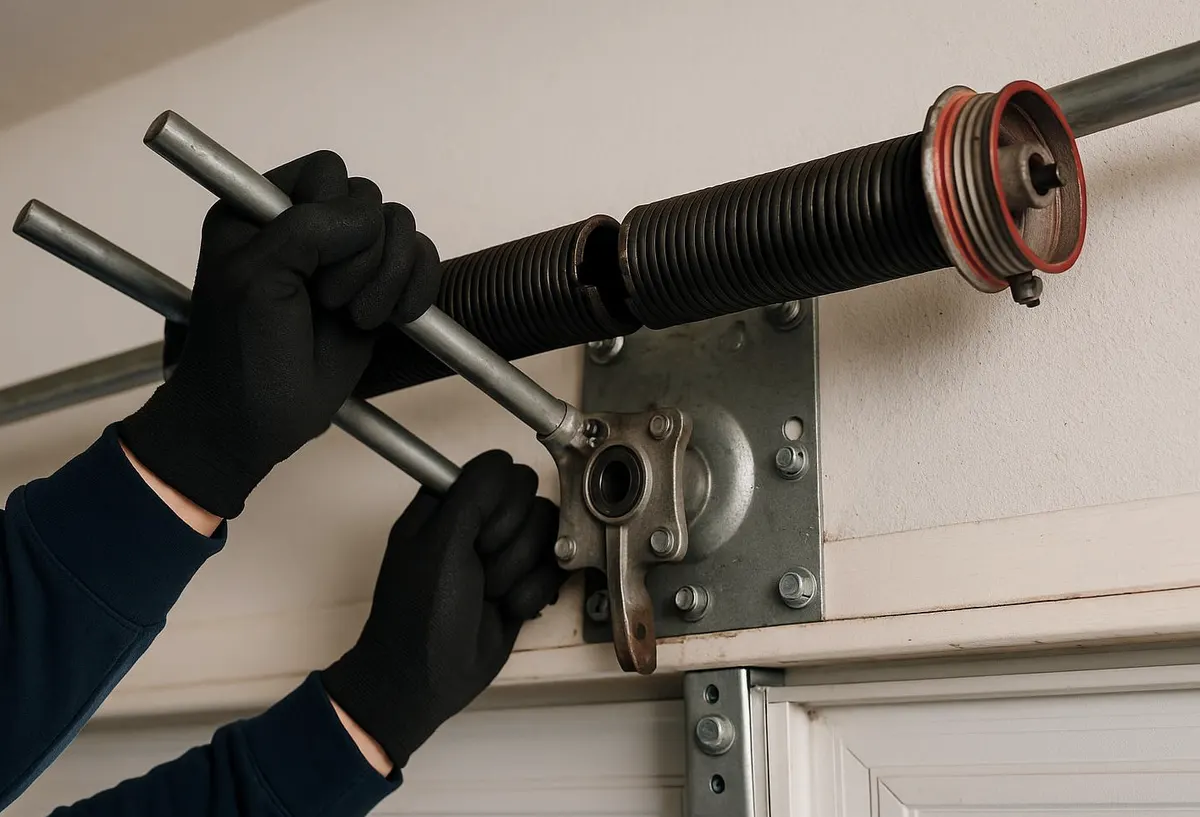
If the door won't budge even when manually disconnected, a broken torsion or extension spring is a likely cause. Springs carry the full weight of the door, and once one breaks, the opener simply isn't strong enough to lift it alone. This is not a do-it-yourself repair — the springs are under heavy tension and a release can cause serious injury. A proper spring repair involves replacing both springs (even if only one failed, the other is usually close behind) and recalibrating the tension to the correct cycle rating for the door's weight.
7. Cables
Closely related to springs are the lift cables that guide the door's movement along the track. Salt air near the coastal parts of the service area accelerates rust on cable strands and drums, and a frayed or snapped cable will often cause the door to hang crooked or refuse to move at all. Cable repair means replacing the cable and inspecting the drum and spring system it's connected to, since a failed cable is sometimes a symptom of a bigger spring issue.
8. Opener Motor and Gear
Last on the list is the opener itself: a stripped drive gear (often announced by a motor that runs but produces no movement, sometimes with a grinding noise), a worn-out drive belt or chain, or a motor that's simply reached the end of its service life after years of humidity and heat exposure in an uninsulated garage.
When to Call Precision Garage Door of Telogia
If you've checked the power, the sensors, and the remote and the door still won't move — or if you hear that telltale bang and the door won't budge — stop troubleshooting and call. Our technicians diagnose in the same order outlined above, starting with the simple and safe checks before touching springs or cables. We handle Garage Door Spring Repair and Garage Door Cable Repair regularly across Telogia, Bristol, Hosford, and the rest of Liberty County, and we'll explain exactly what failed and why before any work starts.
If your garage door in Telogia, FL won't open, call Precision Garage Door of Telogia. We'll diagnose it right, explain it honestly, and get it moving safely.